Sell in New Zealand: Trade Me, Designer Wardrobe and Where FLUF Fits
Which marketplaces a Kiwi seller can reach, what Trade Me charges since it dropped casual success fees, when GST starts to matter, and which channels FLUF can list to.



- From New Zealand, FLUF Connect lists to Trade Me and Designer Wardrobe, plus international channels such as eBay, Etsy and your own Shopify store.
- Trade Me no longer charges a success fee on casual sales, and buyers now pay through Ping, Afterpay or cash on pickup.
- Buyers have more rights when the seller is in trade, and GST registration becomes compulsory at NZ$60,000 of sales a year.
- FLUF publishes to Trade Me but cannot take a Trade Me listing down, so a sold item there is one you withdraw by hand.
Is FLUF useful for a New Zealand seller?
It is if Trade Me is your main shop and you want the same stock in front of buyers who never open it: fashion shoppers on Designer Wardrobe, collectors abroad on eBay, gift buyers on Etsy, or your own customers on a Shopify site. You add each item to FLUF once and choose where it goes.
If you only sell a few things a year on Trade Me, you probably do not need a crosslisting tool at all. FLUF starts to pay off when you have dozens of items live in more than one place and keeping them straight by hand has become a chore.
The two local marketplaces
Trade Me
Trade Me is where most New Zealanders buy and sell second-hand. In 2026 it said goodbye to success fees for casual selling on Trade Me Marketplace. The same change brought payment inside the site: buyers pay with Ping, Trade Me’s own payment service, and you can book door-to-door shipping through Book a Courier. For a household clearing out a garage, selling there now costs close to nothing. The change covers casual selling, so if you trade as a business, check the fee page for your account type before you price.
Trade Me works best for items people search for by name: a specific lens, a Kathmandu jacket, a pram model. Auctions still suit anything with competing buyers, and fixed-price listings suit everything else.
Designer Wardrobe
Designer Wardrobe is a fashion resale marketplace for pre-loved clothes, shoes and accessories, and New Zealand is one of the two countries it serves. Buyers there come for clothes and brands, so a dress that sits among thousands of general listings on Trade Me is in front of the right audience. If you sell clothing, it is the obvious second channel.
The two rules that change once you sell a lot
The first is consumer law. Consumer Protection’s guide to private sales and second-hand goods says a buyer’s rights depend on whether the seller is in trade or a private seller, and that buying second-hand from an online business carries the same rights as buying new. Its Consumer Guarantees Act page says every business and person in trade must meet the Act’s guarantees. Once you are buying stock to resell across three marketplaces, assume that means you, and describe condition and faults carefully on every listing.
The second is tax. Inland Revenue says you must register for GST when your turnover from a taxable activity was at least $60,000 in the last 12 months, or you expect it to be in the next 12. GST is 15%. Crosslisting makes that threshold easier to reach, because the same stock is working in several places at once.
Currency and your own shop
Trade Me and Designer Wardrobe price in New Zealand dollars. eBay and Etsy buyers abroad see their own currencies, so decide whether an item listed at NZ$80 at home should carry a higher price overseas once postage is added. FLUF keeps one price per item and lets you set a different one per marketplace.
If you want your own website, Shopify’s New Zealand pricing page lists the Basic plan at US$29 a month on a yearly plan, with card rates from 2.65% plus 30 cents NZD. The subscription is charged in US dollars and the card fees in NZ dollars, so compare the two carefully against Trade Me.
What FLUF does on each channel
| Trade Me | Designer Wardrobe | eBay, Etsy, Shopify | |
|---|---|---|---|
| How you connect | FLUF browser extension | Sign in with your Designer Wardrobe account | Sign in with each account |
| Publish listings from FLUF | Yes | Yes | Yes |
| FLUF sees a sale here | No, mark it sold in FLUF | Yes | Yes |
| FLUF ends the listing here when it sells elsewhere | No, withdraw it on Trade Me | Yes | Yes |
| Relisting | No | Included from the Pro plan upwards | eBay and Etsy, from the Pro plan upwards |
In practice, a Designer Wardrobe or eBay sale takes the item down on the other channels FLUF can manage, and leaves you one job: withdraw the Trade Me listing. A Trade Me sale works the other way round. Mark it sold in FLUF and the rest come down. Do that as soon as Trade Me’s sale email arrives, before a second buyer finds the same item elsewhere.
Beyond the local marketplaces
From New Zealand you can also connect Facebook Marketplace for local pickup, WooCommerce if your site runs on WordPress, and Vestiaire Collective or Grailed for designer pieces with a buyer overseas. All of them draw on the same stock list.
How to start
- Connect the channel where your stock already lives and bring your listings into FLUF.
- Install the FLUF browser extension and connect Trade Me while signed in to your Trade Me account.
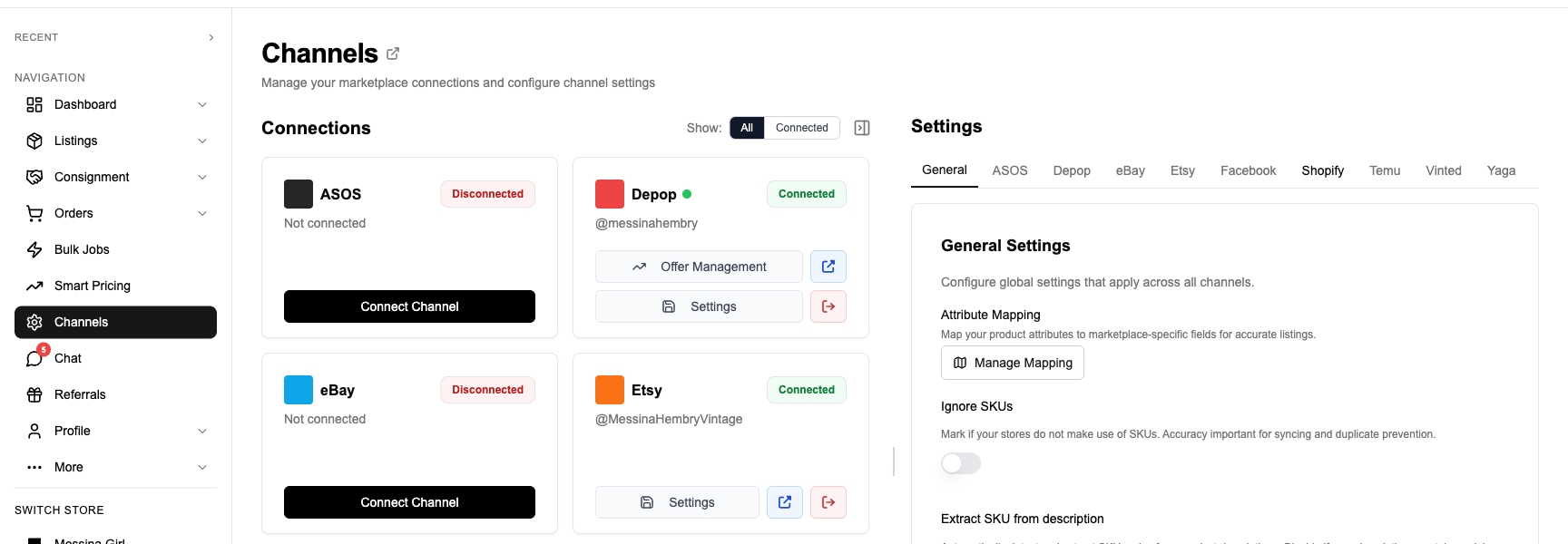
- Connect Designer Wardrobe, eBay or Etsy by signing in.
- Pick the items to send, set a NZ dollar price for the local sites and a separate price for overseas buyers, then publish.
What FLUF costs
Crosslisting and inventory sync are on every plan. Start with 7 days for £1, then from £9/month, then plans from £9/month. Relisting and offer management are included from the Pro plan upwards.
| Plan | Monthly | Crosslisted products |
|---|---|---|
| Starter | £9/month | Unlimited |
| Pro | £29/month | Unlimited |
| Priority | Custom pricing — tell us what you need | Unlimited |
Sources
- Trade Me: success fees removed for casual selling
- Consumer Protection: private sales and second-hand goods
- Consumer Protection: Consumer Guarantees Act
- Inland Revenue: registering for GST
- Shopify: New Zealand pricing
Sources checked September 2026.
Related guides
Frequently Asked Questions
Trade Me and Designer Wardrobe locally, plus international channels such as eBay, Etsy, Facebook Marketplace, Vestiaire Collective and your own Shopify or WooCommerce store.
Not on casual selling. Trade Me removed success fees for casual sellers on Trade Me Marketplace in 2026. Sellers in trade and business accounts should check Trade Me's fee page for their own rates.
No. FLUF publishes listings to Trade Me, but withdrawing a sold item there is a manual step. Mark a Trade Me sale as sold in FLUF and your other listings come down.
Inland Revenue says registration is compulsory once sales from your taxable activity reach NZ$60,000 in 12 months, or you expect them to. GST is 15%.
If you are in trade, yes. Consumer Protection says every business and person in trade must meet the Consumer Guarantees Act, and buyers of second-hand goods from an online business have the same rights as when buying new.
Only for Trade Me among the local sites. Designer Wardrobe, eBay, Etsy and Shopify connect by signing in from FLUF.
Sign up for free
Join the community
You're in.
Open your dashboard